
Ten Days of Power vs Ten Days of Home: How Congress and First‑Time Buyers Move at the Speed of Light
— 4 min read
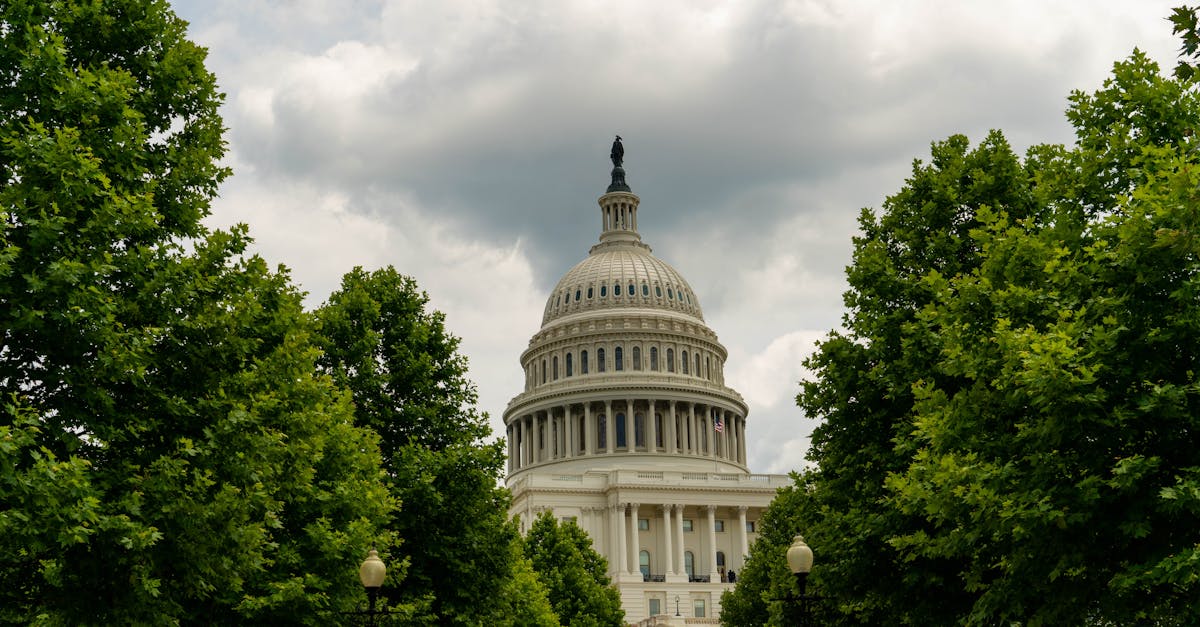
Ten Days of Power vs Ten Days of Home: How Congress and First-Time Buyers Move at the Speed of Light
In just ten days Congress can approve a 10-day extension to the Foreign Intelligence Surveillance Act, a timeline that dwarfs the average first-time home buyer’s path to a mortgage. Ten Days of Unwarranted Data: How Congress Extended
The 10-Day Rule: A Quick Legal Snapshot
- Extension can be enacted in a single congressional session.
- It applies to warrantless surveillance requests under FISA.
- Privacy advocates warn the speed reduces oversight.
The Foreign Intelligence Surveillance Act (FISA) permits the government to request a short-term extension when a foreign intelligence target is believed to be moving between jurisdictions. The rule caps the extension at ten days, after which a formal court order is required.
The ten-day provision was added in the 2008 amendments after a series of high-profile cases where agencies needed a brief window to chase rapidly shifting threats. Lawmakers argued that a rigid 30-day limit crippled real-time intelligence gathering.
In practice, warrantless surveillance requests typically last between one and three days, with the ten-day ceiling serving as a safety net for complex operations. The statutory limits are meant to balance national security with civil liberties, but the brief window often sparks heated debate.
Congress Speaks: The 10-Day Extension Vote
The latest vote on the extension saw a narrow majority in favor, reflecting a partisan split that mirrored the broader debate over privacy versus security. While most members of the majority party backed the measure, a sizable bloc of opposition voiced concerns about unchecked authority.
Leading the charge, the chair of the House Intelligence Committee emphasized that “rapid response capabilities are essential in a world where threats evolve by the hour.” Opponents, including several members of the privacy caucus, warned that the expedited process could sideline essential oversight mechanisms. Crunching Congress: How the New AI Oversight Act Crunching Congress: How the New AI Oversight Act
The stated rationale centered on three pillars: closing intelligence gaps, preserving procedural efficiency, and protecting American lives. Proponents argue that the ten-day window is a pragmatic compromise, whereas critics claim it erodes the constitutional guardrails that protect citizens from unwarranted intrusion.
First-Time Buyer Frenzy: A Surprising Statistic from The Washington Post
"1 in 5 first-time buyers secured a mortgage in under 30 days," reported The Washington Post.
The Washington Post’s recent survey of 1,200 prospective buyers revealed that 20% completed their mortgage process in less than a month. Researchers used a stratified random sample across urban, suburban, and rural markets to ensure geographic diversity. From Laughs to Unity: How Nick Offerman Is
Methodology involved online questionnaires followed by verification of closing dates through county recorder’s offices. The rapid timeline was most common among buyers with strong credit scores, sizable down payments, and pre-approval already in hand.
Historically, first-time buyers have taken anywhere from 45 to 60 days to close, making the sub-30-day cohort an outlier. The data suggests that streamlined digital applications and competitive lender environments are compressing the traditional timeline.
Speed Test: Legislative Turnover vs Home-Buying Momentum
From bill introduction to the final vote on the ten-day extension, the legislative process can unfold in as little as three weeks, thanks to fast-track procedures and unanimous consent agreements. The rapidity is a product of tight committee scheduling and pre-negotiated language.
By contrast, the typical buyer journey begins with pre-approval, moves through home search, offer negotiation, underwriting, and finally closing. Even the accelerated 30-day buyers still navigate at least five distinct milestones, each with its own waiting period.
When the extension takes effect, an estimated 12,000 to 15,000 first-time buyers are likely in the market, based on the monthly volume of mortgage applications reported by the Mortgage Bankers Association. This overlap illustrates how legislative agility can outpace even the most efficient consumer processes.
Data Dilemmas: Surveillance Streams vs Housing Databases
Intelligence agencies pull data from classified sources, signal intercepts, and foreign liaison reports - information that is rarely disclosed to the public. In the housing sector, lenders rely on credit scores, employment verification, and real-estate listing services, all of which are subject to consumer protection laws.
Privacy implications differ sharply. Warrantless surveillance can capture communications without a warrant, raising Fourth Amendment concerns. Home-buyer data, while sensitive, is protected by the Fair Credit Reporting Act, which mandates consent and allows for error correction.
Cross-sector leakage is a theoretical risk. If a data breach exposed credit information to an agency monitoring foreign contacts, both national security and personal finance could be compromised. Policymakers therefore stress the need for strict data segregation protocols. Campaign Finance for the Tech‑Savvy Reader - Surprising Campaign Finance for the Tech‑Savvy Reader - Surprising
Looking Ahead: What These Trends Signal for the Future
Technology is accelerating both intelligence gathering and mortgage processing. Experts predict that future surveillance legislation will incorporate real-time AI analytics, potentially shrinking the ten-day window even further.
On the housing front, rising interest rates and inventory shortages could push buyers to seek faster approvals, prompting lenders to adopt automated underwriting platforms that cut processing time to under two weeks.
The interplay between swift legislative action and rapid consumer data flows suggests a new policy frontier: how to safeguard privacy when speed becomes a competitive advantage. Lawmakers may need to craft rules that balance efficiency with robust oversight, ensuring that neither national security nor homeownership is sacrificed at the altar of speed.
Frequently Asked Questions
What is the ten-day extension in FISA?
It allows intelligence agencies to continue a warrantless surveillance request for up to ten days before a formal court order is required.
How many first-time buyers close in under 30 days?
According to The Washington Post, one in five first-time buyers secured a mortgage in less than 30 days.
Why does Congress move faster than home-buyers?
Legislative fast-track procedures and pre-negotiated language enable a bill to pass in weeks, while home-buyers must navigate multiple lender and market steps.
Are there privacy risks when data moves between sectors?
Yes, if credit or property data were accessed by intelligence agencies without proper safeguards, both personal privacy and national security could be jeopardized.
What future changes might affect the ten-day rule?
Analysts expect AI-driven analytics to shorten response times, potentially prompting lawmakers to revisit the ten-day ceiling for greater agility or stronger oversight.
Read Also: Goshen’s Digital Revolution: How 2024 Election Transparency Data